Have your arches collapsed? Do your feet feel tired or sore after standing all day? Do your ankles feel unstable or prone to rolling? These are all common signs of foot and ankle dysfunction – and are highly treatable.
The foot and ankle form the foundation of the body, absorbing load with every step and providing the stability needed for walking, running, and sport. When this system is not functioning efficiently, it can contribute not only to local pain, but also issues further up the chain including the knee, hip, and lower back.
Injuries can occur suddenly (such as rolling an ankle) or develop gradually due to biomechanics, footwear, training load, or previous injury. This often presents as pain, swelling, stiffness, weakness, or instability.
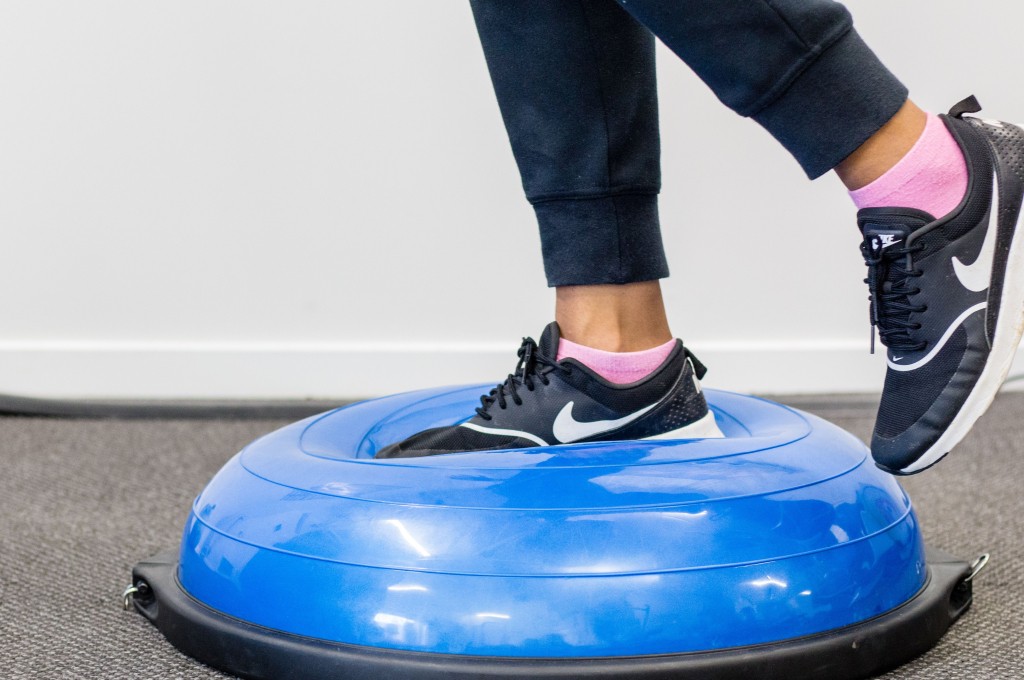

At Physio Mechanics, we take a detailed approach to ankle and foot injuries – assessing not just the site of pain, but contributing factors such as foot biomechanics, strength, balance, and lower limb control. Your assessment includes joint mobility, ligament integrity, muscle function, balance, and gait analysis. Where appropriate, we use computerised gait scanning technology to identify loading patterns that may be contributing to pain or recurrent injury.
Treatment is hands-on and may include joint mobilisation, soft tissue therapy, dry needling, and taping, combined with a targeted strengthening and control programme. We also provide orthotic assessment where indicated, and footwear advice to reduce load and support recovery. Our goal is to restore efficient movement, reduce pain, and prevent recurrence so you can return confidently to activity.
One of the most common ankle injuries, usually occurring when the foot rolls inwards suddenly. This can overstretch or tear the ligaments on the outside of the ankle, leading to pain, swelling, bruising, and difficulty weight bearing. More significant injuries can result in ongoing instability and a tendency for the ankle to “give way”.
Early and accurate rehabilitation is essential to restore stability and prevent long-term recurrent sprains.
A very common cause of heel and foot pain, caused by irritation of the plantar fascia – a thick band of tissue supporting the arch of the foot. It can develop suddenly or gradually, often worse with first steps in the morning or after rest. It is commonly associated with load changes, footwear, or biomechanical overload.
If not addressed early, it can become a persistent and limiting condition – however, with targeted treatment and load management, outcomes are highly positive.
The Achilles tendon is the strong tendon at the back of the ankle responsible for push-off in walking, running, and jumping. It can become painful due to sudden increases in load or repetitive strain from running, jumping, footwear issues, or insufficient calf strength and flexibility.
Symptoms often include stiffness, pain with activity, and tenderness along the tendon. With appropriate loading and rehabilitation, most cases respond very well to physiotherapy.
Anterior ankle impingement occurs when tissue or bony structures at the front of the ankle become compressed during movement, most commonly with squatting, lunging, running, or kicking. It often develops after an ankle sprain or ongoing stiffness, leading to a pinching pain at the front of the ankle and reduced mobility, especially in deep bending positions.
Physiotherapy focuses on restoring ankle movement, reducing irritation, and correcting contributing biomechanical factors to prevent recurrence.
Take control of your recovery with confidence. Reach out today.